

A crown has needed attention again. One side feels uncomfortable when chewing. A repair helped for a while, but the same concern returned. Before planning another replacement, it can be useful to ask what is driving the pattern.
If you live in Nairobi or elsewhere in Kenya and are considering a consultation in India, organise the history around that question. Dr Chirag Chamria can assess dental and jaw concerns together where appropriate, helping distinguish a repair that is needed from a broader problem that requires a different plan.
Tell us which dental problem keeps returning.
Describe the pattern before naming the treatment
Start with when the discomfort occurs, which area is affected and what you are doing when it begins. Does it relate to chewing, opening, a particular tooth or a specific food? Mention swelling, changes in bite and any previous procedures.
Bring dates for repeated repairs if you have them. Note what improved afterwards and what returned. Those details are more useful to the assessment than arriving with a fixed expectation of bite adjustment, implants or jaw surgery.
Let the findings guide the next step for Dental Review in India
Chewing discomfort can involve teeth, restorations, supporting tissues, muscles or the jaw joint. An examination determines which findings are relevant; a symptom alone cannot establish a TMJ diagnosis.
Dr Chamria's work includes oral rehabilitation and jaw assessment. If the consultation identifies a dental cause, the relevant plan may focus on that tooth or restoration. If a jaw or muscle concern needs further evaluation, the discussion should explain what is known and what remains to be assessed.
The TMJ and jaw pain information can help you prepare questions. For a damaged natural tooth, also explore tooth-preserving care.
A case that illustrates the value of assessment
One documented case from India involved N., a 40-year-old woman from Maharashtra, with a two-year history of discomfort when chewing on the upper right side. Her assessment included examination, X-rays and a digital bite analysis.
Her treatment involved occlusal rebalancing or rehabilitation. At the reported one-year review, she described comfortable chewing. This individual result does not establish the cause of another person's jaw or chewing discomfort.
Her experience makes a useful point to discuss in your own consultation: understanding the problem comes before choosing a procedure.
Before and after
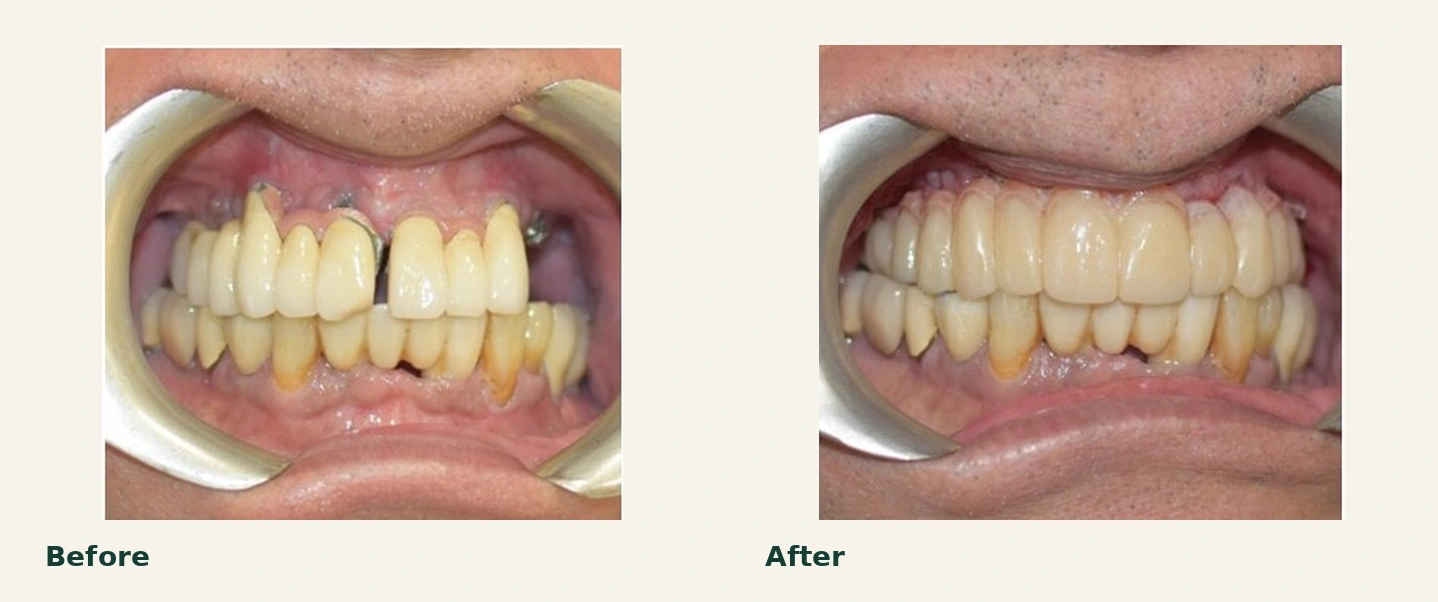
Separate restorative comparison C16 — P., 62, Jaipur. Pulp treatment and PMMA restorations for tooth wear. These images illustrate restoration of worn teeth; they do not show N.’s occlusal rehabilitation.
Hear a patient experience
A separate patient experience from the clinic’s public video library. This is general clinic feedback, not a testimonial about N.’s occlusal rehabilitation.
Arrange a review of the teeth, restorations and relevant jaw concerns.
Ask what a bite test contributes
If digital bite analysis is proposed, ask which question it is intended to help answer and how the findings fit the examination. A technology name is not a diagnosis on its own.
Before agreeing to changes to teeth or restorations, ask what is being changed, why it is appropriate and what alternatives exist. If a plan includes several procedures, have the sequence and purpose of each one explained.
Make the trip answer a clear question
Send the clinic a concise description of your concern and ask which previous records it needs. Confirm what requires an in-person examination and whether an initial discussion would help organise the visit.
Your travel dates should leave room for the assessment rather than assume a particular treatment can begin immediately. If care will continue in Kenya, ask what summary your local clinician should receive.
Plan the investigation before planning another repair
Begin with the history of the recurring problem: the affected area, triggers, previous treatment and what changed after each repair. Bring relevant records and say whether the concern involves a natural tooth, a crown, a bridge or a moving prosthesis. That information directs the initial examination.
Dr Chamria reviews the teeth and restorations alongside the supporting tissues and the relevant jaw and muscle findings. Imaging or bite analysis may be used when they help answer a clinical question. Ask which findings explain the symptoms and whether any other cause still needs assessment.
The planning discussion then separates the problems that require treatment. A damaged tooth may need restoration, a prosthesis may need attention, or a jaw concern may need a different pathway. Request an explanation before agreeing to changes to tooth surfaces or a larger reconstruction. Where more than one procedure is proposed, establish its purpose and place in the sequence.
The written plan should identify the intended intervention, alternatives, estimate and review points. After the agreed treatment, assessment of the response helps determine the next step. Before travelling back to Kenya, clarify what your local dentist should monitor and what information to share if symptoms persist. A useful plan includes how progress will be judged, rather than treating the next repair as the end of the discussion.
What the photographs can and cannot show
Alongside N.'s functional case, the article includes a separate tooth-wear comparison: P., a 62-year-old man treated in Jaipur with pulp treatment and fixed PMMA restorations. His recorded six-month review described comfortable eating and greater smile confidence. These images illustrate restorative change; they do not demonstrate a TMJ diagnosis or measure pain relief. They can help you ask whether your concern is about tooth damage, function, or both.
Dr Chamria's work across oral rehabilitation and jaw concerns provides a setting for that wider discussion. Bring the recurring problem itself and let the examination guide the proposed care.