

The photograph of your new teeth may mark an exciting moment. If you live in New Zealand, the next question is equally practical: who will help you care for them after you return home?
Distance makes aftercare an essential part of choosing treatment in India. Discuss it with Dr Chirag Chamria before agreeing to a fixed-teeth plan, while you can still compare the maintenance needs and likely future visits of the options available to you.
Discuss treatment and aftercare before committing to a long journey.
Choose a restoration you can maintain
Ask how the proposed teeth are supported and what daily cleaning involves. Request a demonstration using the restoration you will actually have, together with instructions suitable for your treatment stage.
Fixed teeth still require care and reviews. If dexterity, access or an existing health condition makes cleaning difficult, say so during planning. The design and care discussion should take account of what you can realistically manage after returning to New Zealand.
The dental implant guide explains the distinction between implants and the teeth they support. Knowing those components will also make later maintenance conversations clearer.
Case discussion: a six-year review after restoring worn natural teeth
M., a 57-year-old woman from Maharashtra, sought help for progressive tooth wear affecting her smile. The recorded findings were generalised attrition and abfraction. Her treatment involved crown preparation and fixed Multicom SAPTeeth crowns across the upper and lower arches, supported by her natural teeth.
One treatment visit was recorded. At the reported six-year review, she described comfortable eating and greater confidence when smiling. This was a tooth-supported restoration case, not an implant case. It illustrates why “fixed teeth” needs a precise explanation: the supporting structures, material and maintenance requirements matter after the fitting day as well as during treatment.
Before and after
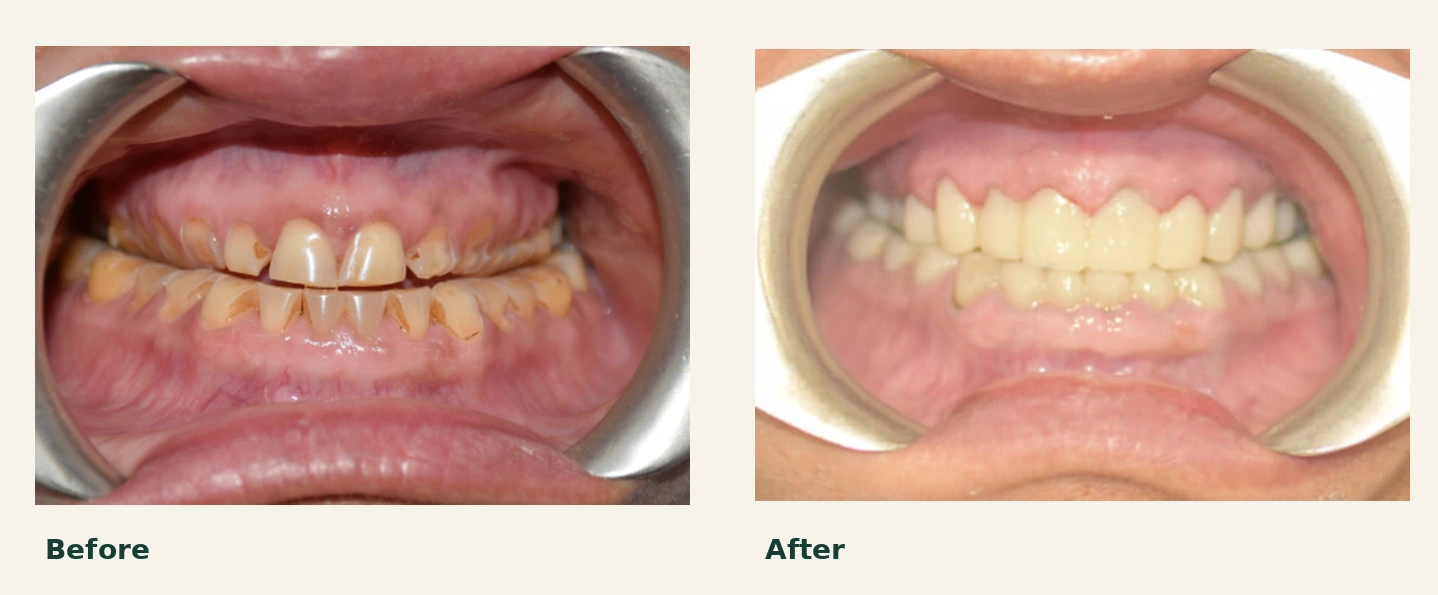
C11 — M., 57, India. Crown preparation and tooth-supported Multicom SAPTeeth crowns. One treatment visit recorded.
Hear a patient experience
A separate patient experience from the clinic’s public video library.
Ask how the proposed fixed teeth will be maintained after you return home.
Separate remote support from an examination
If you looking for Dental Aftercare in India, then an online discussion may help the treating team understand a concern and advise the next step. It cannot perform an adjustment, clean around a restoration or replace every clinical examination.
Ask which follow-up discussions can take place remotely, which need an appointment and what role a dentist in New Zealand could have. Do not assume there is an established local partner or that any dentist can perform every repair. Agree the expected arrangements before you depend on them.
Keep a useful record of what was fitted
Before leaving India, ask which records will help another clinician understand your treatment. Depending on the plan, these may include a treatment summary, relevant imaging, implant and component details, restoration material and the review schedule.
Keep those records somewhere you can access easily. If another dentist needs information, ask the treating clinic how it can be shared with your permission. A clear record helps avoid relying on memory when a tooth or component needs attention later.
Read warranty terms from your home address
The clinic describes service-free warranty support for up to nine years on eligible plans. The written terms determine what applies to your material and treatment.
For someone living in New Zealand, useful questions are very concrete: Where must a covered repair take place? What conditions apply to reviews? Are travel, accommodation or another clinician's fees excluded? Does routine maintenance carry separate charges?
Do not treat a warranty duration as a promise of maintenance-free teeth or paid international travel. Ask for the coverage and exclusions before choosing a plan on that basis.
Agree what happens when something changes
Before departure, know how to contact the clinic, when the next review is expected and what to do if a restoration feels loose, damaged or uncomfortable. Ask what information the team would need and when local assessment is necessary.
If something needs prompt attention at home, seek appropriate local care rather than waiting for an overseas trip. Tell the treating clinic about the assessment so records and the next step can be coordinated.
Put aftercare into each stage of the treatment plan
At the first assessment, explain that you live in New Zealand and discuss your realistic access to future appointments. Dr Chamria reviews your oral condition, previous treatment and ability to manage the proposed restoration. Those practical details belong alongside the clinical findings when options are compared.
Before agreeing to treatment, review the proposed support system, material and cleaning needs. The written plan should specify the procedure sequence, any temporary stage and the restoration intended for longer-term use. Confirm which clinical reviews form part of that sequence and whether additional care is expected later.
At fitting, ask for the cleaning demonstration and instructions appropriate to the restoration. The clinical team also assesses fit, bite and comfort as relevant. Identify any concerns while you are still able to attend the planned checks in India.
Before departure, assemble the treatment summary, component details where applicable and the agreed follow-up information. Establish how to contact the clinic and what would require a local examination. Once home, continue the recommended professional maintenance and scheduled reviews. This approach makes aftercare part of the original treatment decision, with fewer assumptions left to resolve after a long journey home.