A documented patient from the USA
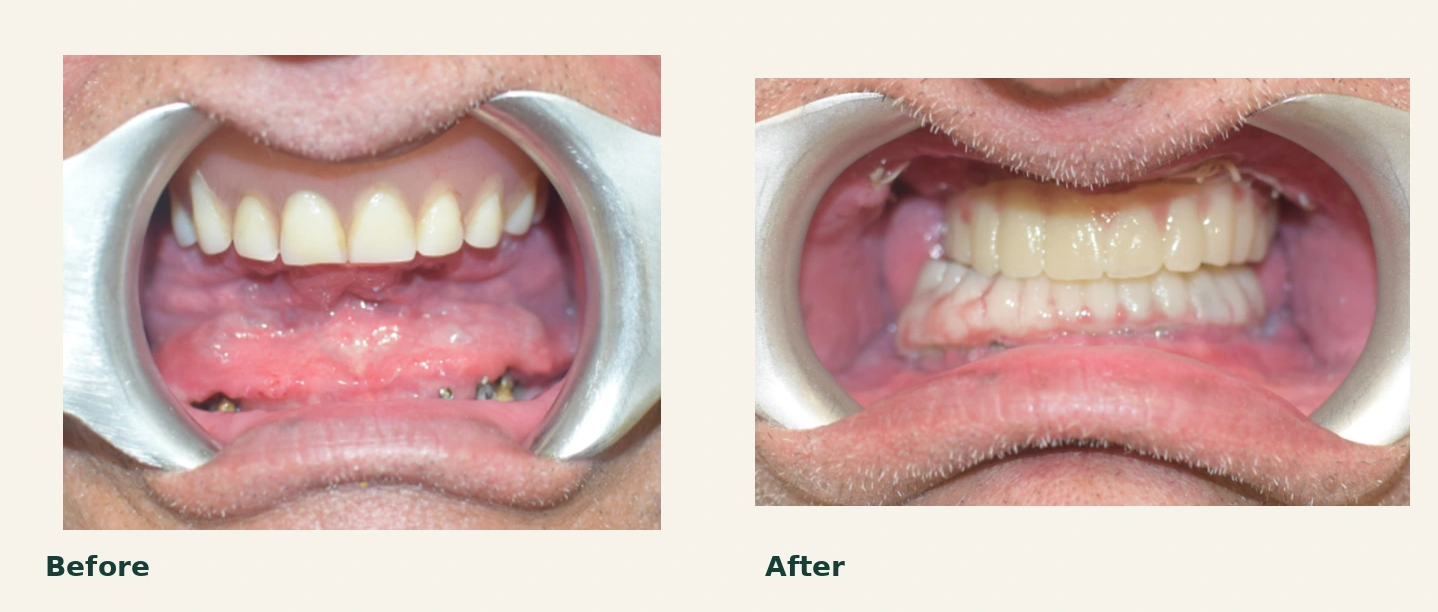
One documented case in Dr Chamria's practice involved S., a 62-year-old man living in the USA, who had an upper complete denture and a dislodged lower prosthesis, with severe bone loss. His rehabilitation used two zygomatic implants and seven additional implants, with fixed HIPC restorations for both arches.
Treatment took place over two days. At the recorded three-year review, he described comfortable eating. This is an individual case; it does not establish the number of implants, treatment duration or outcome for another patient. It does show why an assessment needs to consider both the available bone and the teeth the implants will support.
Before and after
C02 — S., 62, living in the USA. Fixed HIPC rehabilitation using two zygomatic and seven additional implants; treatment over two days.
Hear a patient experience
A separate patient experience from the clinic’s public video library.
Would you like a complete-plan discussion with Dr Chamria?
Why discuss the whole rehabilitation with Dr Chirag Chamria?
Dr Chamria is an Oral & Maxillofacial Surgeon whose clinical work includes complex implant-supported rehabilitation. That surgical perspective is relevant when a plan must bring together bone assessment, implant placement and the eventual bite.
Explore the full-mouth implant assessment if you need an arch restored. For one or several missing teeth, start with the dental implant options. The right scale of treatment follows examination rather than the name of a package.
Make your first discussion worthwhile
Prepare the estimate you have already received, relevant dental records and your main functional concerns. Are you avoiding foods, struggling with a denture or hoping to replace a particular bridge? Explain the problem in your own words.
Before booking treatment travel, ask which records can be reviewed in an initial discussion and what still requires an examination in India. If a material or warranty is important to your decision, request its exact name and written coverage, including where maintenance and repairs must take place.
From your US estimate to a complete treatment sequence
Your first planning discussion starts with what the present teeth allow. Dr Chamria reviews the concern, previous dental work and medical history, then identifies which findings require an examination or imaging. Bring the estimate from your US provider so the discussion can address the same areas of the mouth.
The assessment in India considers natural tooth support, missing teeth, available bone and the bite. Suitable options are then explained together: preservation where feasible, a limited replacement, or a larger rehabilitation when required. If severe upper-jaw bone loss is relevant, the reason for considering zygomatic support should be connected to the scan findings.
The written proposal should separate any tooth treatment, implant surgery, the first restoration, later restorative stages and clinical reviews. Ask which stages have been allowed for in the estimate. A material name such as HIPC describes the restorative teeth; it does not by itself describe the implant system or every component beneath them.
Before committing to travel for treatment, confirm the appointment sequence and what could require a change. After fitting, the team checks the restoration and explains the cleaning and diet appropriate to the treatment stage. Agree your early reviews, the records you will take home and the plan for maintenance in the USA. You can then judge the proposed treatment as a complete course of care rather than a collection of component prices.
What you gain from a surgeon-led comparison
Complex rehabilitation brings several decisions into the same discussion: what can stay, what needs replacement and how the final teeth will function. In-house imaging and laboratory coordination support that process when needed. For a patient living overseas, having those questions addressed together can make the first consultation particularly useful. The aim is a plan you can explain to your family, compare with the advice you already have and organise around your own circumstances.