Why Does My Jaw Hurt? TMJ Pain, Ear Pain, Headaches and Referred Pain Explained
Jaw pain can be surprisingly difficult to describe. One person points directly in front of the ear. Another feels a dull ache in the temple. Someone else complains of ear pressure even though the ear examination is normal. Others feel pain in the cheek, teeth, behind the eye, at the back of the head or down into the neck. This is one reason temporomandibular disorders—TMD—are often misunderstood. The place where you feel pain is important, but it is only the beginning of the investigation.
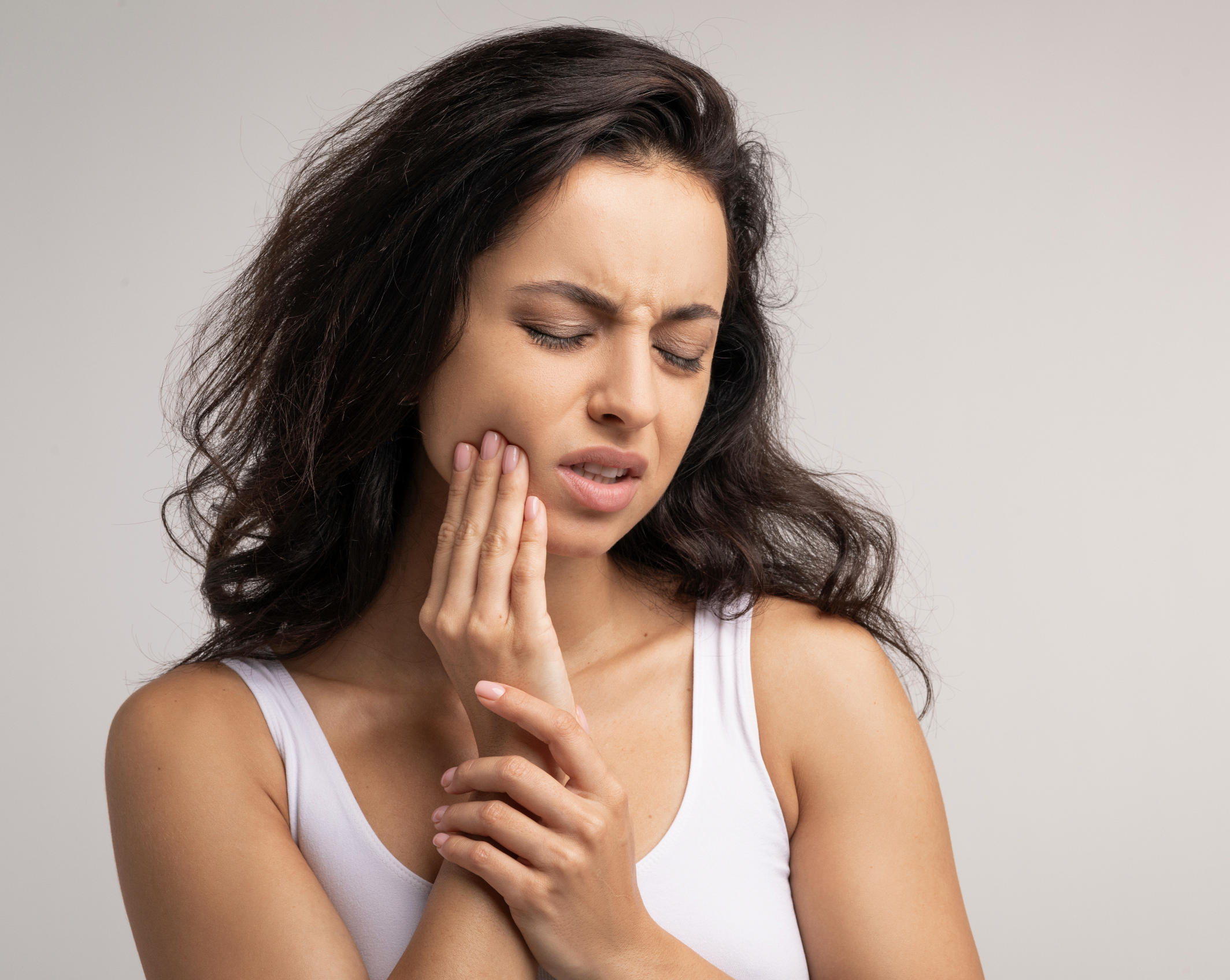
TMJ is the joint; TMD is the problem family
The temporomandibular joint sits just in front of the ear and allows the lower jaw to rotate and slide during speaking, chewing and yawning. But TMD is broader than the joint itself. It includes pain and dysfunction involving the joint, the chewing muscles and related pain mechanisms. Two patients can point to exactly the same spot and still have very different problems.
One may have predominantly muscular pain. Another may have an inflamed joint. A third may have a mechanical problem such as locking. A fourth may have a combination of jaw pain, neck dysfunction, poor sleep, headache and pain sensitisation. That is why the question should not be, “Which TMJ treatment do I need?” The better question is, “What structure or mechanism is most likely producing my familiar symptoms?”
Why pain can travel
Pain does not always remain exactly where the problem begins. The chewing muscles, jaw joint, cervical structures and sensory pathways of the head and face are closely related. A painful masseter or temporalis muscle may create sensations that a patient interprets as toothache, earache, facial pressure or headache. At the same time, a diseased tooth, sinus problem, neuralgia or another condition can be mistaken for TMD.
During examination, one of the most useful questions is not simply, “Is this area tender?” Many people are tender if enough pressure is applied. What matters more is whether examination reproduces the familiar pain that brought the patient to the clinic. That familiar-pain concept helps distinguish a clinically meaningful finding from a random sore spot.
Ear pain, fullness and tinnitus
The ear and TMJ are close neighbours, so patients with TMD may report ear fullness, pain, pressure or tinnitus, especially when a routine ear examination does not reveal an obvious otologic cause. But this overlap should never become an excuse to label every ear symptom as TMJ. New hearing loss, discharge, infection, severe vertigo or other significant ear symptoms deserve appropriate ENT assessment.
Headache and temple pain
The temporalis muscle sits over the temple and participates in chewing. A patient who clenches, braces the jaw or repeatedly overloads this muscle may experience temple pain. Some headaches can also be attributed to TMD when they are modified by jaw function and familiar pain is reproduced during examination. However, migraine, tension-type headache, cluster headache, eye problems, sinus disease and other headache disorders have their own diagnostic pathways.
Clicking does not automatically mean damage
A jaw click can be alarming, but the sound alone does not tell us how serious the problem is. A click can occur when the articular disc changes its relationship with the condyle during opening. Many people have a painless click for years without important functional limitation. In those patients, explanation and observation may be more appropriate than aggressive treatment.
The history becomes more important when the pattern changes—for example, a joint that used to click but then becomes quiet while mouth opening becomes restricted. That sequence can suggest a different mechanical problem and deserves assessment.
What does “my jaw locks” actually mean?
Patients use the word locking for several different experiences. Some mean that the jaw momentarily catches. Others wake with stiffness. Some cannot open beyond a limited range, while others become stuck open. These are not the same diagnosis. Restricted opening can arise from a non-reducing disc, muscle spasm, pain-related guarding, infection, trauma and other less common conditions. Measuring mouth opening is useful, but the quality of movement, history and examination matter just as much.
A normal scan does not mean the pain is imaginary
One of the most important lessons in TMD care is that imaging and pain do not have a perfect one-to-one relationship. A person can have significant myofascial pain, protective muscle guarding, sleep disturbance or pain sensitisation even when the joint image looks relatively unremarkable. The opposite is also true: a scan can show disc displacement or degenerative change in someone who is functioning reasonably well.
We should treat the patient—not the picture.
When jaw or facial pain needs a different diagnostic door
Most TMD is not dangerous, but not every new jaw or facial symptom should be self-managed. Significant swelling, fever, spreading infection, recent major trauma, unexplained numbness or facial weakness, a new neurologic change, unexplained weight loss, a mass, persistent ulceration, rapidly progressive limitation, severe new headache, visual symptoms or a major unexplained change in the bite should prompt professional assessment.
The takeaway
If you remember one idea, make it this: pain location is the beginning of the investigation, not the end. A good TMD assessment asks what reproduces your familiar pain, how the jaw moves, whether muscles or the joint appear involved, what changed before the symptoms started, and whether another condition could be mimicking TMD.
If this article sounds familiar, the chapter behind it goes much deeper into ear symptoms, headaches, referred pain, clicking, locking, restricted opening and warning signs. In Understanding Your TMJ: Finding Your Way Out of Jaw Pain, Part II of Beyond the Jaw, Dr. Chirag Chamria walks through the reasoning using patient stories and practical decision points. Read the book to continue from “where does it hurt?” to the more important question: “why does it hurt?”