
After oral cancer treatment, a dental appointment may involve more than replacing a missing tooth. You may want to understand what can help with chewing, a difficult prosthesis or the effect of changed anatomy on everyday function.
For patients in Tanzania and neighbouring East African countries considering a specialist visit to India, the starting point is a careful review of previous treatment and current needs. Dr Chirag Chamria's work includes oral rehabilitation after cancer treatment, with options considered around the individual clinical findings.
Discuss your rehabilitation concern and the records needed for review.
Keep rehabilitation connected to your cancer history
Dental Rehabilitation After Oral Cancer Treatment does not replace oncology care or cancer surveillance. Ask how the proposed assessment relates to your current follow-up and what information is needed from the clinicians who treated you.
Relevant records may include the operation summary, available pathology reports, details of radiotherapy if you received it, previous reconstruction or prosthesis information, and current medicines. Ask the clinic which records apply to your case so that the discussion is focused and manageable.
If radiotherapy forms part of the history, the actual treatment information matters. Do not assume that a generic implant plan is suitable without review of that history.
Explain the function you want to improve
Describe what happens during a normal meal. Are some foods difficult? Is a prosthesis uncomfortable? Are mouth opening or speech among the concerns you would like assessed?
Those goals help the clinician discuss what rehabilitation is trying to achieve. They also make it easier to explain which limitations may remain and whether a proposed restoration is practical to use and maintain.
The after-cancer rehabilitation page introduces the assessment. The possible plan depends on anatomy, tissue condition, previous treatment and overall health; it is not necessarily an implant plan.
What one rehabilitation case illustrates
A documented case from India describes R., a 57-year-old man from Maharashtra, who had undergone oral cancer surgery six years before dental rehabilitation. He had missing teeth on the left upper and lower sides and severe bone loss.
His recorded rehabilitation included five implants, pulp treatment of retained teeth and HIPC fixed restorations. Fixed teeth were fitted on the treatment day. At the reported one-year dental review, he described comfortable eating.
This is an individual dental rehabilitation result. It does not describe a cancer outcome or predict what treatment someone travelling from Tanzania will need. Your own cancer operation, any radiotherapy and current health must be reviewed when discussing suitable options.
Before and after
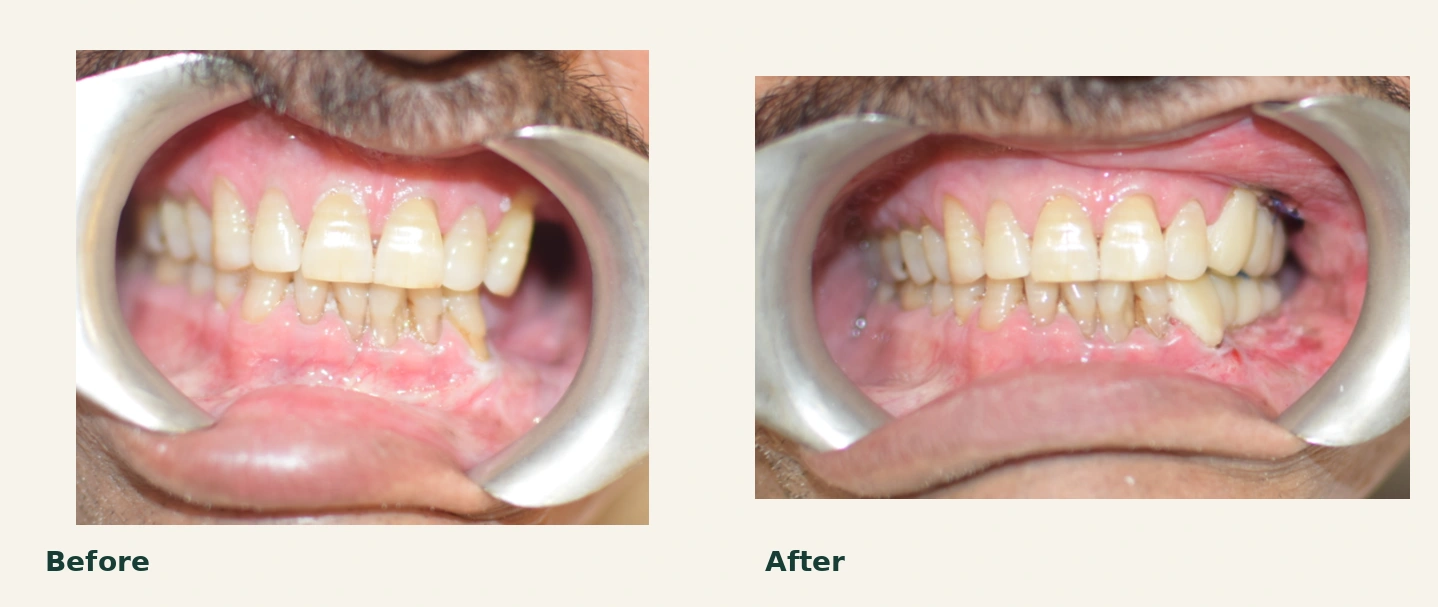
C06 — R., 57, India. Dental rehabilitation six years after cancer surgery using five implants, selected pulp treatment and HIPC teeth; same-day fitting confirmed.
Hear a patient experience
A separate patient experience from the clinic’s public video library. This is general dental feedback, not a cancer-rehabilitation outcome.
Ask how dental rehabilitation can be planned around your treatment history.
Coordinate before arranging the journey
Ask whether an initial discussion and review of relevant records can identify what further information is needed. The definitive plan may require an in-person examination and investigations.
If more than one clinical team needs to be involved, establish their roles before confirming treatment travel. Ask where appointments would take place, what stages are anticipated and how the rehabilitation plan will remain connected to your existing care at home.
Consider support after the procedure
Discuss the practical help you may need with travel, meals, cleaning and communication. Ask whether an accompanying person should attend the consultation and what they should understand about the proposed care.
Before returning to Tanzania or another East African country, confirm the review arrangements and what records should be shared with your local clinicians. Any new or changing concern related to your cancer history belongs with the appropriate treating team rather than waiting for a future dental trip.
Follow the rehabilitation plan from records to practical use
The planning process starts with your cancer-treatment history, current concerns and the records needed to understand the anatomy. An initial discussion can help identify missing information, but the clinical plan depends on an appropriate examination and investigations. Where necessary, the dental discussion should be coordinated with the relevant treating specialists.
The assessment considers the remaining tissues and teeth, existing reconstruction or prosthesis, oral function and the practical goal of rehabilitation. Explain what you can currently eat and how the present situation affects you. Ask which findings limit the available choices and what improvement the proposed option is intended to support.
Dr Chamria can then discuss appropriate restorative or prosthetic routes. The possibilities may include a removable prosthesis, a defect-replacing prosthesis or implant-supported treatment where suitable. Request the reasons for the recommendation, the alternatives, the treatment stages and a written estimate. Surgical and non-surgical requirements should be explained as part of the same rehabilitation plan.
During fitting and review, the team assesses how you are managing with the proposed restoration and explains its cleaning and use. Before returning to East Africa, agree the dental reviews and the information your clinicians at home need. Continue the oncology follow-up already arranged. The aim is coordinated rehabilitation around your actual treatment history and the function you hope to improve.
Bring a family member into the practical discussion
An accompanying relative can help remember instructions and explain the difficulties seen at home, with your agreement. Use the consultation to discuss meals, access for cleaning and any help needed around appointments. The clinic describes in-house diagnostic and laboratory support, operating theatres and private rooms for patients and relatives. Ask which facilities and professional arrangements apply to the care being proposed for you. Knowing how the treatment will fit daily life makes the conversation more useful than considering the prosthesis alone.