

You hear it during a call from Australia: your parent is avoiding certain foods, using a loose denture or putting off an appointment. You want to help, but you are also several time zones and a long journey away.
The first useful step in arranging Parents’ Dental Care in India is to arrange a consultation around your parent’s own concern. Ask what is troubling them most and what they hope would improve. Their answer may be more specific than the full-mouth treatment you have been researching on their behalf.
Help your parent arrange an assessment, with their agreement.
Make room for your parent's priorities
Some people want to eat more comfortably. Others are worried about a moving tooth, a denture that slips while speaking or the thought of surgery. Write down the concern in their words.
Ask whether they would like you to join a discussion remotely, receive information or help compare costs. The patient should agree who is involved. Family support works best when it helps them understand and choose, rather than making the decision before they have met the clinician.
Case discussion: helping an older patient move beyond a loose prosthesis
M., a 75-year-old man from India, wanted fixed lower teeth because his removable prosthesis made eating uncomfortable. His assessment recorded missing teeth and substantial bone loss in both jaws, with remaining natural teeth considered in the plan.
Treatment combined ten implants, pulp treatment of selected teeth and fixed HIPC restorations across the upper and lower arches. Same-day fitting of the fixed teeth was confirmed. At the recorded two-year review, he described more comfortable eating.
For a family supporting a parent from Australia, the lesson is how a functional concern can guide the consultation. The treatment followed his individual assessment. Another parent may need a smaller intervention, a different restoration or further medical review before deciding.
Before and after
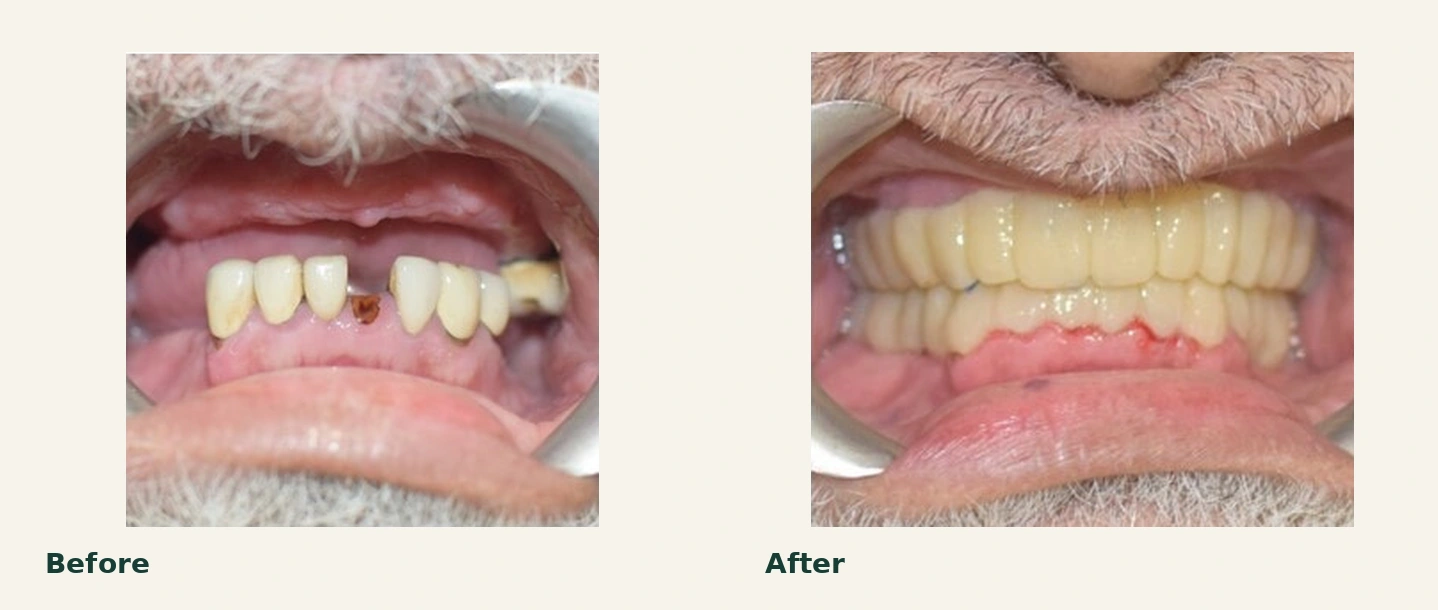
C01 — M., 75, India. Ten implants, selected pulp treatment and HIPC fixed restorations; same-day fitting confirmed.
Hear a patient experience
A separate patient experience from the clinic’s public video library.
Bring the patient and supporting family into a clear planning discussion.
Help prepare the information the clinician needs
With your parent's agreement, organise existing dental records, a medicine list and relevant medical information. Tell the team about practical needs such as mobility, hearing, communication or support getting to the clinic.
Do not change medicines or suggest stopping them to fit a dental appointment. Ask the treating team what medical information or coordination is required for the proposed care. If there is a local relative who will attend, agree who is handling appointment details so instructions do not get lost between family messages.
Ask what needs treatment and what can remain
Dr Chirag Chamria assesses the remaining natural teeth before proposing their removal. If your parent has several missing teeth, the consultation can compare options for the actual areas needing restoration.
A discussion of full-mouth implants should explain which arch or arches are involved, what existing teeth can be retained and how the replacement teeth would be supported. If the immediate concern is mobility, begin with the loose teeth assessment.
Older age does not tell the clinician everything needed to choose a treatment. The assessment and proposed support arrangements need to reflect your parent's health, mouth and ability to manage care afterwards.
Discuss comfort and accompaniment early
The clinic describes dental operating theatres and private rooms for patients and accompanying relatives. Ask which arrangements would apply to your parent's appointment or treatment; these facilities are separate from accommodation for a trip.
If you are travelling from Australia to accompany them, confirm the clinical schedule before fixing your leave. If you are supporting from abroad, ask how the team can include you in an agreed discussion and which questions should be answered directly by your parent.
Put the practical agreement in writing
Before deciding, request the proposed options, stages, estimate and reviews. Clarify who will help with transport, cleaning instructions, meals and attendance where needed.
Ask your parent to explain the plan back in their own words. This is often a useful way to uncover an unanswered question about the first teeth, later treatment or ongoing care. Payment arrangements should support that informed choice rather than replace it.
A planning pathway your family can follow together
The first stage is preparation with your parent's permission: their main concern, medical information, medicine list and previous dental records. Agree who should attend and whether an overseas family member may join an appropriate discussion.
At the appointment, Dr Chamria examines oral health and the relevant teeth, supporting tissues and bite. Investigations are arranged when needed. The options should be explained directly to your parent, including what each option aims to improve and what care it would require afterwards.
The written proposal brings together any treatment of natural teeth, extractions if necessary, implants or other replacements, materials and the estimate. Ask which procedures would take place together and which need separate visits. Where comfort or anaesthesia arrangements are relevant, have them explained alongside the practical support the patient will need.
Before treatment, coordinate transport and an accompanying person if advised. Afterwards, the care discussion should include eating, cleaning, medicines as prescribed and the review appointments. Agree who will help your parent remember and follow those instructions. Whether you are present in India or supporting from Australia, a shared written plan gives everyone a clear role while keeping your parent involved in the decisions.