

A tooth breaks and suddenly the search becomes “implant treatment in India.” But replacement is only one possible direction. The more useful first question is whether the damaged tooth can be treated and restored.
If you are travelling from Nepal for dental care, an assessment with Dr Chirag Chamria can help identify the teeth that need attention and what preserving them would involve. A clear plan begins with the findings in your mouth, even when you have already read about a particular treatment online.
A broken tooth deserves an individual assessment.
A documented restorative case from Nepal
S., a 70-year-old man from Nepal, reported a broken upper-left back tooth that had been troubling him for two months. The recorded findings also included decay in other teeth, pulp involvement and mobility of some lower front teeth.
The documented care involved selected pulp treatment and HIPC fixed restorations during a visit to India. The case summary describes restorative care rather than an implant procedure. Fixed restorations can be supported by natural teeth; having fixed teeth does not automatically mean having implants.
At the ten-day review, he described comfortable eating and greater smile confidence. This early comfort report does not establish long-term durability.
Before and after
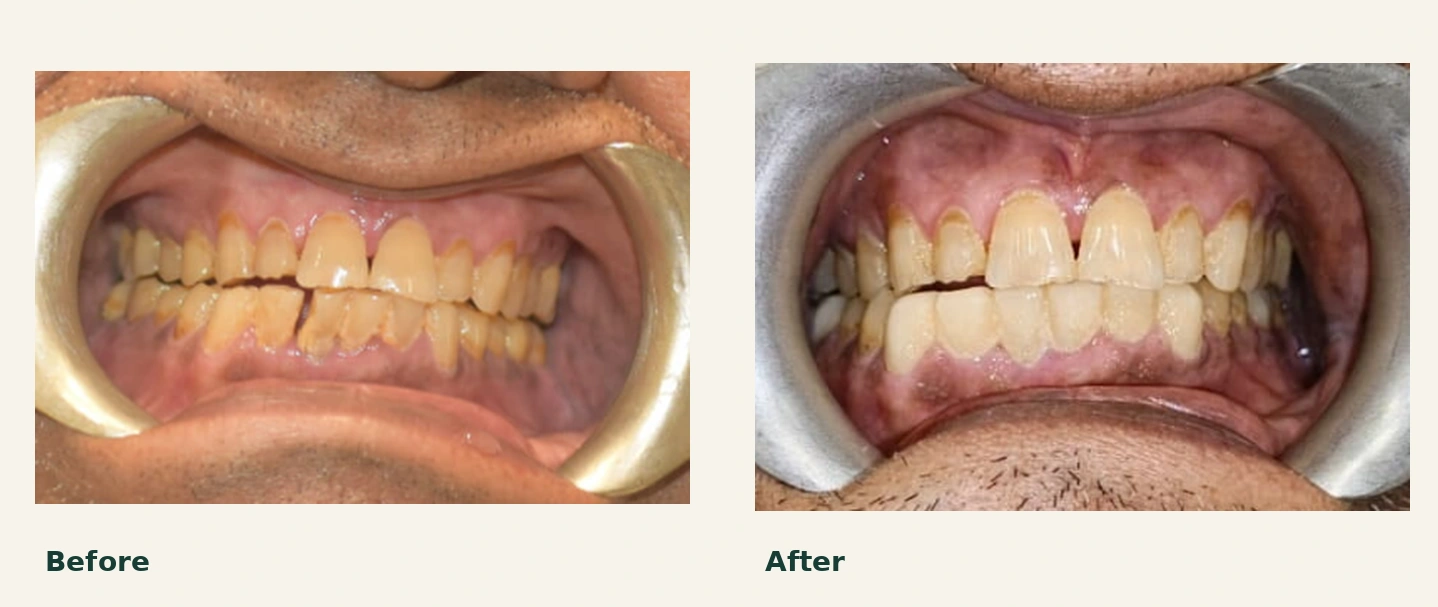
C15 — S., 70, living in Nepal. Selected pulp treatment and tooth-supported HIPC restorations during one visit.
Hear a patient experience
A separate patient experience from the clinic’s public video library.
Discuss what can be restored and how your treatment could be organised.
What the case makes worth asking
A visibly broken tooth can be the immediate reason for a visit while other findings affect the overall plan. Ask the clinician which issue needs attention first and how each proposed procedure relates to the examination for Restorative Dental Care in India.
If the recommendation is to retain a tooth, ask what treatment and restoration it needs. If removal is advised, ask what makes preservation unsuitable and which replacement choices fit the site. You should understand why the plan follows one route rather than assuming every broken tooth needs an implant.
Explore saving natural teeth before your appointment. Where the pulp or roots are relevant, the root canal information can help you prepare questions. The exact procedure still depends on the individual diagnosis.
Understand the name of the fixed teeth
Your written plan should identify whether a restoration is supported by natural teeth, implants or a combination. Ask what material is being proposed and why it suits the teeth involved.
HIPC SAPTeeth is a restorative material option used in some of the clinic's documented cases. Its mention in another patient's record does not establish that it is the appropriate choice for you. Discuss alternatives, expected care and any written support terms for your own plan.
Make an early review useful
After treatment, an early appointment can assess how you are managing and address concerns about comfort or the restoration.
Ask when your next review should take place and whether it needs to be in India or can be arranged with appropriate local care. Keep the treatment summary so your dentist in Nepal can understand which teeth were treated and what was fitted.
Bring the concern that matters most to you
Prepare recent records if available, a medicine list and a short description of the problem. Tell the clinic that you are coming from Nepal and ask what assessment is needed before a treatment schedule can be confirmed.
Dr Chamria's practice includes tooth-preserving treatment as well as replacement options. That makes the consultation a useful place to ask what can remain and how the affected teeth can be restored, without deciding the procedure in advance.
How a restorative plan takes shape during your visit
Begin with the tooth or restoration that brought you to the clinic. Dr Chamria reviews the symptoms and dental history, examines the affected area and considers the wider condition of the mouth. Relevant imaging helps assess findings that cannot be understood from a photograph alone.
The next step is to discuss which teeth can be restored and what each one requires. Decay, pulp involvement, remaining tooth structure and tooth mobility can lead to different decisions in the same mouth. If pulp treatment is proposed, ask which procedure is intended, how it fits the diagnosis and what restoration is planned afterwards.
The written treatment plan identifies the affected teeth, agreed procedures and material, with the estimate and appointment sequence. If some teeth require replacement, that should be distinguished from restorations supported by natural teeth. Ask whether treatment priorities can be organised around the concern that is making eating difficult.
When restorations are fitted, the clinician checks relevant aspects of fit, bite and comfort. You receive instructions for their care and the next review. An early check can address how you are managing, while longer follow-up assesses the teeth and restorations over time. Before travelling home to Nepal, request the treatment summary and confirm how the agreed ongoing care will be arranged.
Why local diagnosis matters more than a treatment label
The Nepal case illustrates why one broken tooth can lead to a wider assessment. Dr Chamria connects your immediate concern with the other teeth, the bite and the supporting tissues. In-house scanning, X-rays and laboratory coordination can support the agreed restorative plan when needed.