
Being told that a tooth needs removal can leave you with questions that an implant advertisement does not answer. What is wrong with this particular tooth? Is there enough support to keep it? What would saving it involve?
If you live in Singapore and are considering dental care during a visit to India, a focused opinion on those questions may be more useful than beginning with a replacement package. Dr Chirag Chamria assesses natural teeth for preservation before discussing removal and replacement where appropriate.
Been advised to remove a tooth? Arrange a focused assessment.
Ask for the reason behind the recommendation
A tooth can be painful, broken, worn or loose for different reasons. The visible problem alone does not establish whether it should be removed. Bring the records behind the advice you have received, including any relevant X-rays and previous treatment details.
Ask the clinician to identify the tooth, explain the finding and show how it affects the available options. If the advice differs from an earlier opinion, ask what accounts for the difference. You should be able to understand the recommendation without having to choose between competing slogans.
Case discussion: preserving some teeth while replacing others
V., a 55-year-old woman from Maharashtra, wanted fixed teeth in an area with missing upper-right back teeth. Her assessment also identified lower front-tooth wear and decay involving the pulp of several teeth.
The recorded plan combined pulp treatment of selected natural teeth, implants for missing teeth and fixed HIPC restorations across the upper and lower arches. One treatment visit was recorded. At the reported six-year review, she described comfortable eating and greater confidence in her smile.
The case illustrates a useful principle for a second opinion: a mouth can need both preservation and replacement. The decision does not have to be the same for every tooth. The exact pulp procedures and restorative stages for your teeth would be specified after assessment.
Before and after
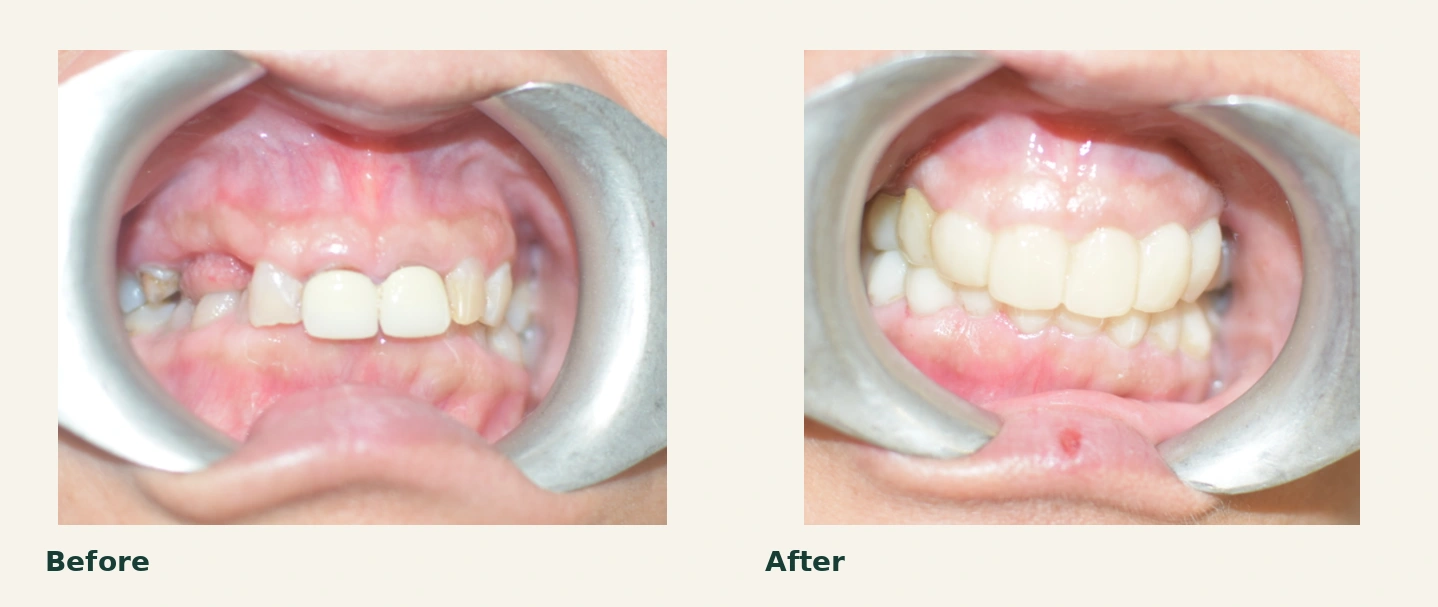
C12 — V., 55, India. Combined pulp treatment, implants and HIPC fixed restorations. One treatment visit recorded.
Hear a patient experience
A separate patient experience from the clinic’s public video library.
Ask which preservation and replacement options fit your findings.
What does a preservation assessment consider?
The consultation to Save Natural Teeth in India can review the remaining tooth structure, supporting tissues, symptoms, previous treatment and the way the tooth meets its opposing teeth. Relevant imaging helps answer particular clinical questions when needed.
If preservation is possible, the plan should explain what treatment and restoration are involved. If it is not considered predictable, ask why, and what replacement choices would be appropriate. “Can it be saved?” and “Is saving it a sensible option in this case?” are useful questions to discuss together.
Explore saving natural teeth before your appointment. For a tooth with relevant pulp or root concerns, the root canal information can help you prepare more specific questions.
Loose does not describe the whole diagnosis
If mobility is the concern, say when you first noticed it and whether it has changed. Mention previous gum treatment, injury, discomfort and any feeling that the bite has changed.
The loose teeth guide explains why identifying the cause matters. A consultation should establish the problem before committing you to a particular stabilisation or replacement approach. There is no universal promise that every loose tooth can be retained.
Why this discussion fits Dr Chamria's practice
His clinical focus includes tooth preservation as well as implants and oral rehabilitation. That range is relevant when the real decision is whether to restore the tooth you have or replace it with something else.
The value of the consultation is an explained comparison: what is feasible, the likely stages, the limitations and the estimate. You may leave with a preservation proposal, a replacement proposal or a need for further assessment. Each outcome should have a clinical reason.
Make a Singapore-to-India opinion practical
Prepare a short history rather than a large, unexplained collection of files. List the affected tooth if you know it, symptoms, previous treatment and the question you want resolved. Ask the team how to provide records through the appropriate channel.
If you are visiting India, leave enough time for the examination and any agreed stages. A consultation does not commit you to beginning treatment on that trip. Where you need ongoing care in Singapore, discuss which records would help your local dentist understand the plan.
Follow the decision from diagnosis to restoration
Your consultation begins with the earlier recommendation and the reason you are seeking another opinion. Dr Chamria reviews symptoms, previous dental work, medical history and the available records. Examination and relevant imaging help assess the affected tooth and the tissues supporting it.
The next discussion explains the possible routes. If the tooth can be retained, ask what treatment is needed before it can support a restoration and which limitations remain. If extraction is recommended, ask for the findings behind that advice and a comparison of suitable replacements.
Once you understand the options, the written plan should identify the teeth involved, agreed procedures, material and estimate. It should also explain whether treatment will be completed in one course or whether a later stage is anticipated. Clarify any arrangements for temporary protection while the plan is being completed.
Following restoration, the team checks the fit and bite and explains cleaning and the next review. If you will continue routine care in Singapore, request a treatment summary with the information your local dentist needs. This gives you a practical path from a worrying recommendation to an explained, tooth-specific decision.