

If you have been told there is too little bone for dental implants, it is reasonable to want a fuller explanation before giving up on fixed teeth or agreeing to another procedure. The next step is to understand where the bone is reduced and which options that finding leaves open.
For patients considering travel from Nigeria to India, a specialist review with Dr Chirag Chamria can help clarify the assessment behind a complex upper-jaw treatment plan. The purpose is to identify an appropriate option for your anatomy, rather than to fit every case into the same procedure.
Bring the bone-loss advice you have received for a specialist review.
First establish what “too little bone for implants” means
Ask which jaw and which sites are involved, what imaging was used and why a particular treatment has been advised. Keep details of previous grafts, implants, sinus procedures or unsuccessful restorations if you have them.
A short written history can be especially helpful when the original treatment took place at different clinics. Tell the clinician what failed to meet your needs: a loose denture, pain, a broken bridge or difficulty eating. A problem with a prosthesis does not by itself establish that the implants underneath have failed.
Case discussion: rebuilding support for a loose upper prosthesis
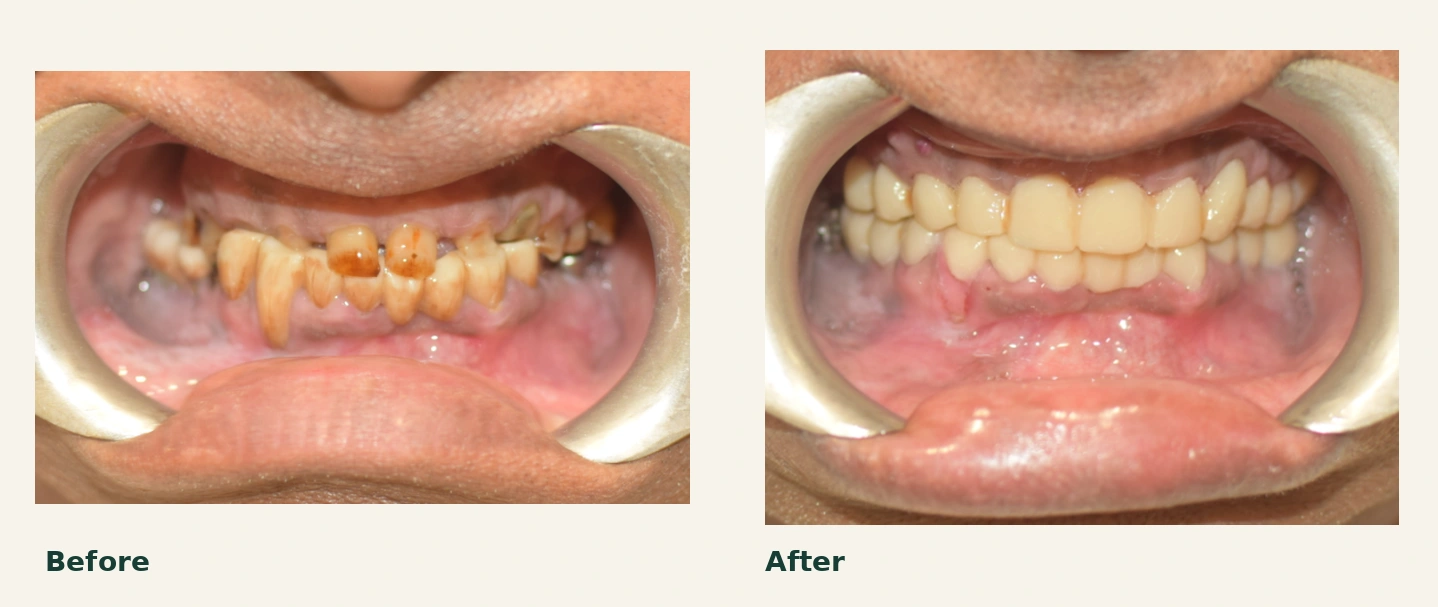
A 70-year-old man had previously received implant-supported upper teeth. His prosthesis had become loose and dislodged, and the assessment recorded severe bone loss.
His upper-jaw rehabilitation used two zygomatic implants, five additional implants and a fixed HIPC restoration. Same-day fitting of the teeth was confirmed for this case. At the reported one-year review, he described comfortable eating.
This is an Indian patient’s example of complex upper-jaw rehabilitation. A loose prosthesis alone does not establish that every earlier implant has failed. For someone travelling from Nigeria, it makes the review of existing supports and previous treatment particularly important before choosing the next operation.
Before and after
Hear a patient experience
A separate patient experience from the public video.
Discuss the supports, replacement teeth and stages your case may require.
Where zygomatic implants fit
Zygomatic implants obtain support from the cheekbone region and may be considered in selected cases of significant upper-jaw bone loss. Their role relates to the upper jaw; treatment in the lower jaw needs its own assessment.
They require careful planning of anatomy, sinus health, surgery and the teeth they will support. They are one option to compare with other suitable approaches, which may include conventional implants, grafting or another form of replacement.
Read the zygomatic implant information before a discussion. Ask why the proposed approach fits your case, what the alternatives involve and what the specific risks and limitations are.
Plan the fixed teeth alongside the surgery
The position and number of implants are only part of a rehabilitation. The plan also needs to explain which teeth are being replaced, their material, the intended bite and how they will be cleaned and maintained.
Dr Chamria's clinical focus includes complex implant-supported rehabilitation. That is relevant when surgical choices and the final restoration must be considered together. His consultation should help you understand the relationship between the scan findings and the teeth you hope to use.
If both arches need assessment, explore the full-mouth implant guide alongside the upper-jaw discussion.
Ask carefully about treatment timing
Same-day fixed teeth may be possible in selected cases when clinical findings and implant stability support that plan. Ask what would be fitted initially, whether later teeth are needed and what could require a different sequence.
An early fitting does not establish that healing is complete or that you can travel immediately. Before confirming travel from Nigeria, agree the anticipated appointment stages, recovery arrangements and clinical reviews with the team. There is no single stay length that applies to every advanced implant case.
Prepare for a specialist discussion
Ask the clinic which existing scans, reports and procedure details are relevant before sending them through the agreed channel. Bring your previous advice and a list of questions, including the complete estimate and future maintenance arrangements.
If you will travel with a relative, discuss what support is likely to be needed. Confirm the appointment and location directly; entry and travel requirements should be checked separately for your circumstances.
How the advanced implant plan is assembled
First, organise the previous implant or graft history and available imaging. An initial discussion can identify the records needed for the specialist assessment. The examination in India reviews the oral tissues, remaining teeth, existing prosthesis and clinical findings relevant to the proposed surgery.
Imaging is considered alongside the examination to understand the bone, sinus region and anatomy needed for planning. Dr Chamria then discusses suitable approaches and why a particular configuration is being considered. Ask how the proposed supports relate to the position and design of the replacement teeth.
The written plan should cover the surgical and restorative sequence together: any additional treatment, comfort or anaesthesia arrangements, implant-supported teeth, material and reviews. Discuss specific risks and alternatives before deciding. If immediate fitting is proposed, establish what will be fitted and what findings could require another sequence.
After treatment, the team explains the care appropriate to healing and the restoration, checks the relevant clinical concerns and confirms reviews. Your return-to-Nigeria arrangements should account for those appointments and the advice on travel. Take the clinical summary and component information needed for future care. Understanding that entire pathway helps you judge an advanced procedure in the context of the rehabilitation it is intended to support.